
Last updated November 23, 2026
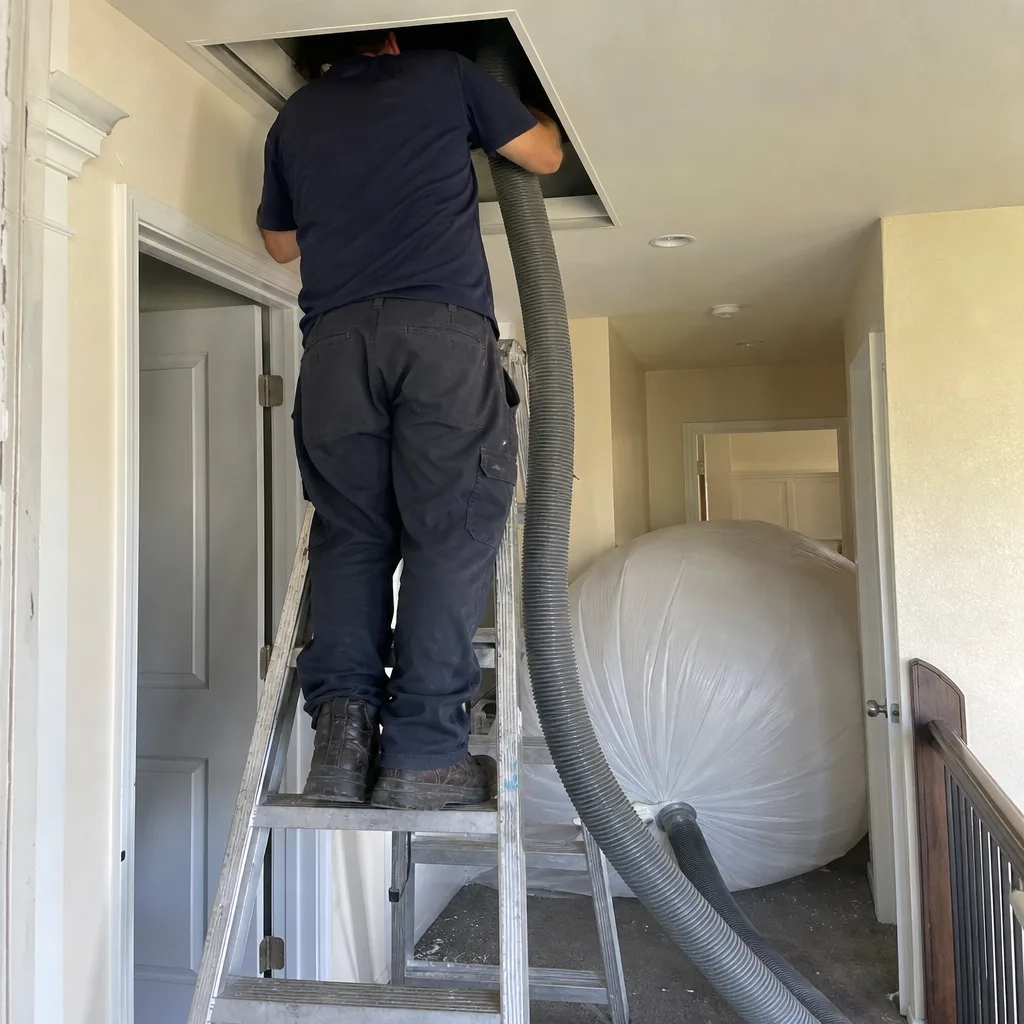
 Whole-home duct cleaning
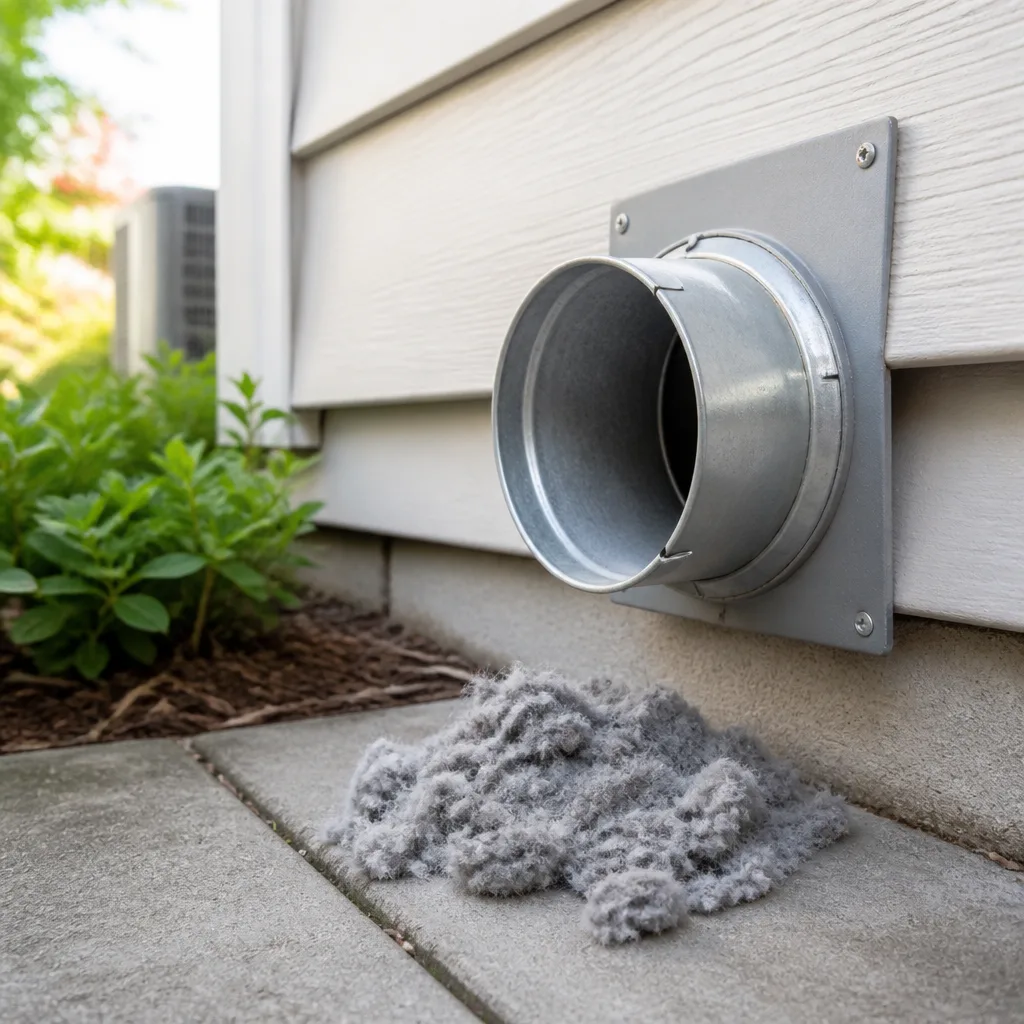 Dryer vent cleaning
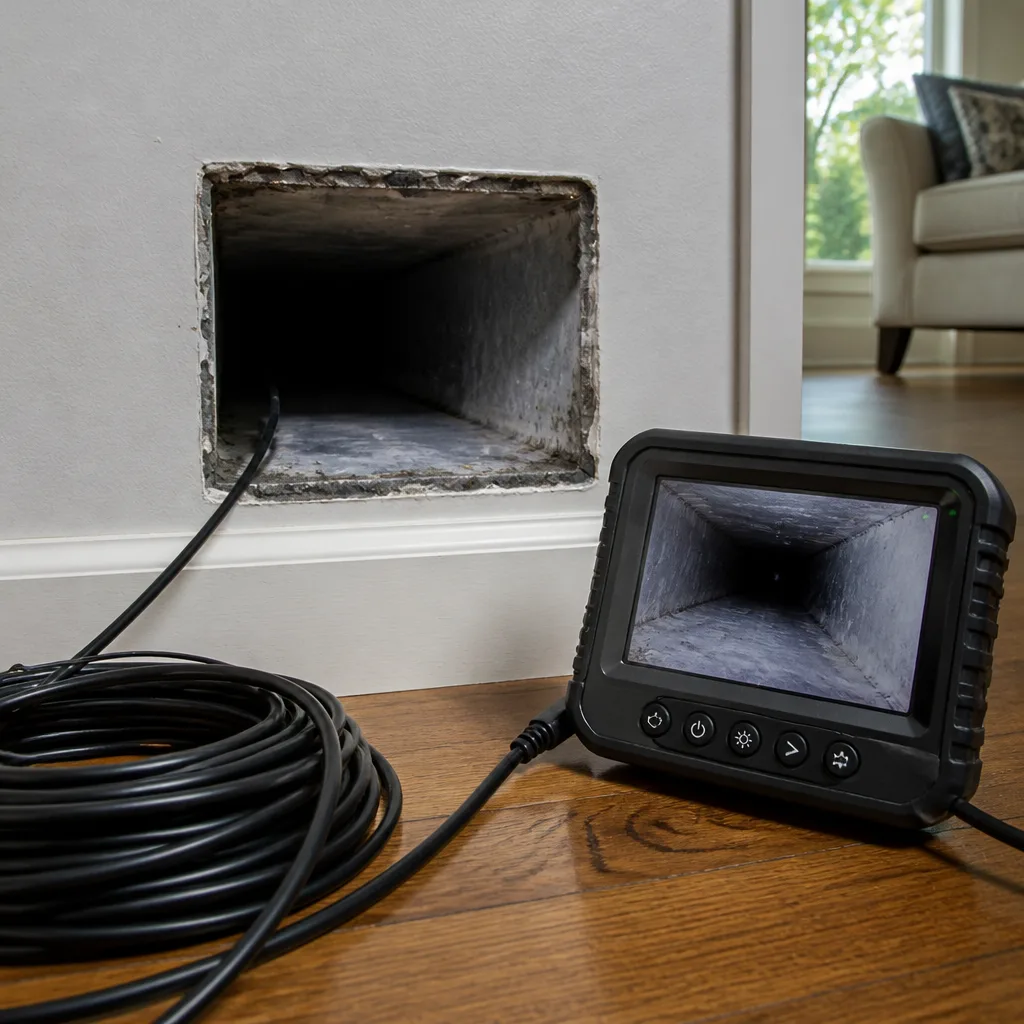 Camera inspection
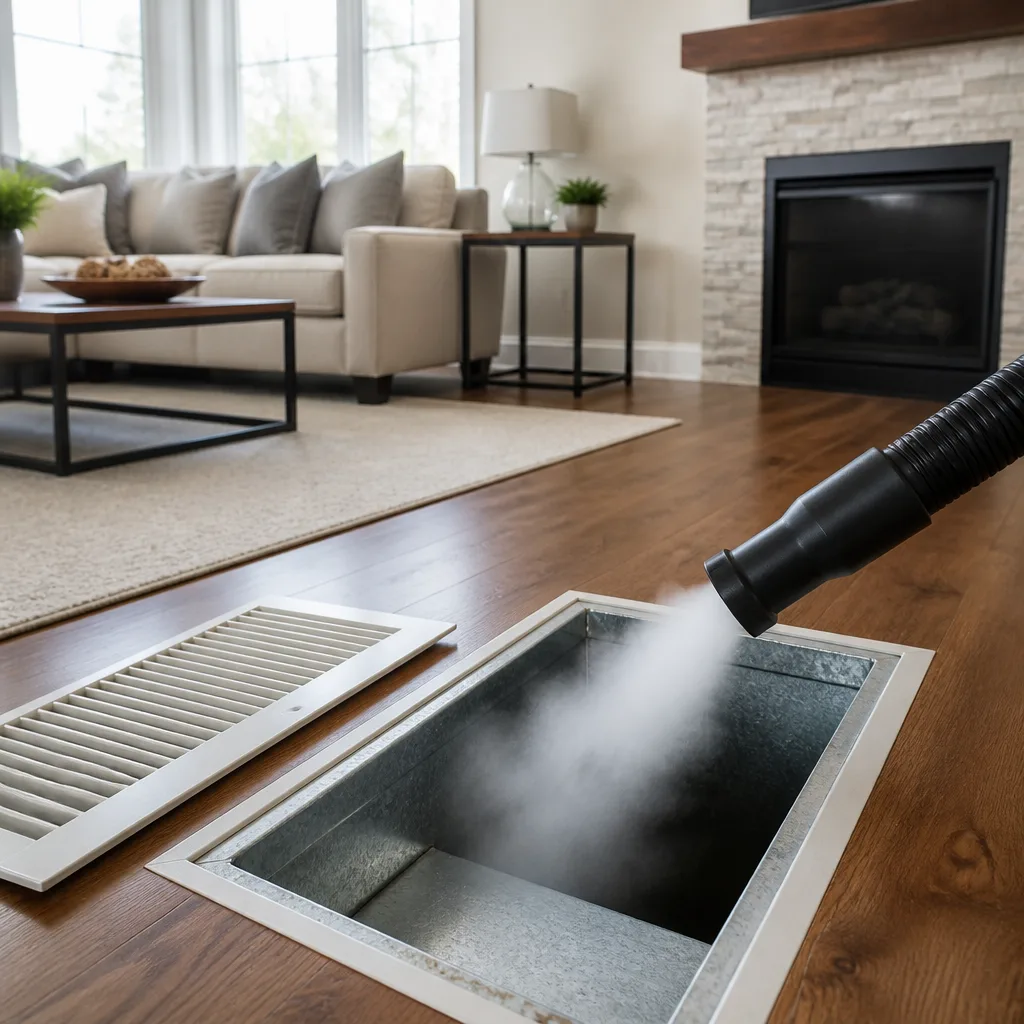 Sanitizing & deodorizing
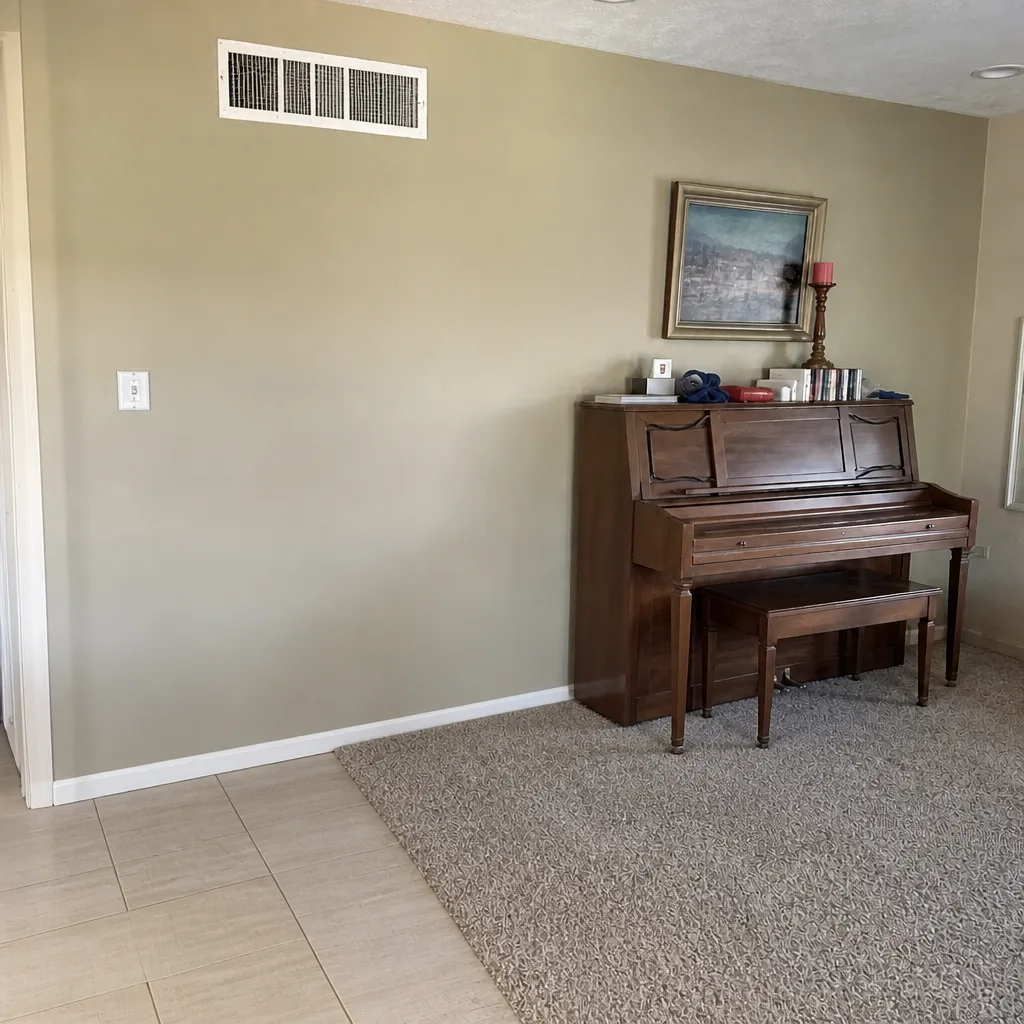
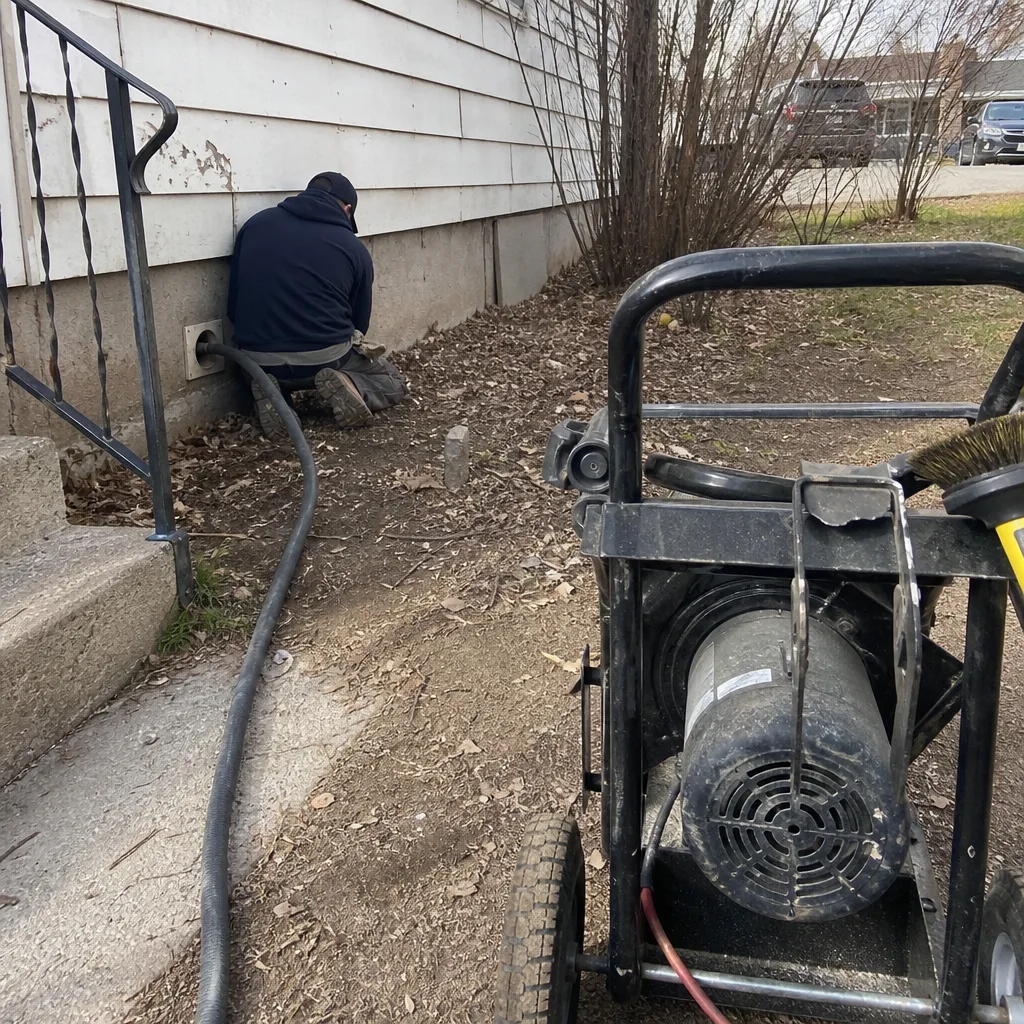
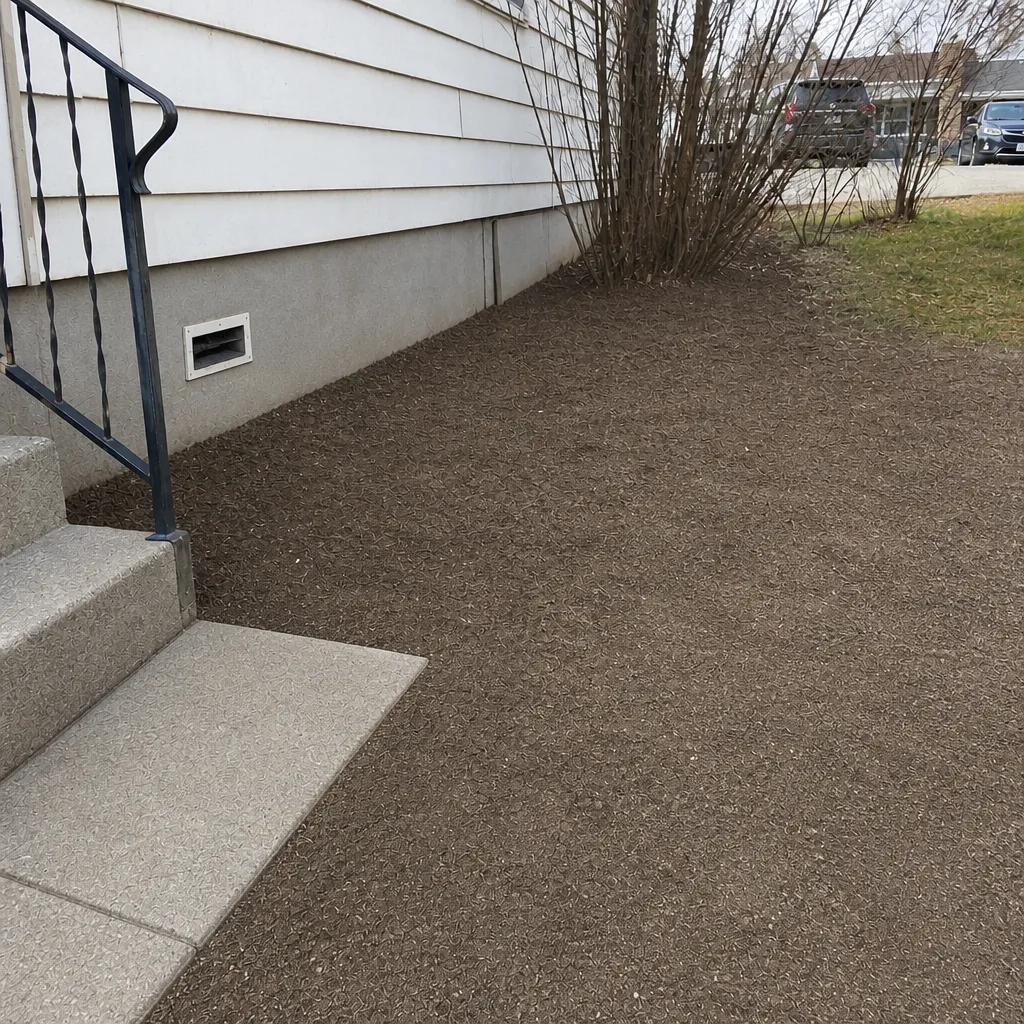
Whole-system duct and dryer vent check with before-and-after photos - you see exactly what came out of your vents
That "$99 whole-house special" is a bait ad - the real number appears once they are in your hallway, or the "clean" is a shop-vac at the register. We photograph the inside of your ducts before and after instead.
Air Duct Cleaning Troubleshooting in Roy: Common Problems and How to Fix Them
If one room in your Roy home is always 5°F cooler than the rest, your thermostat probably isn’t the problem. Your duct system probably is, and no HVAC tune-up will fix it. Most homeowners in Roy start troubleshooting in the wrong place: they call an HVAC tech for a temperature imbalance, buy a better air filter for a dust problem, or light a candle for a musty smell. The symptoms they’re chasing usually live in the ductwork itself. This guide pairs what you actually notice in your home (dust, odor, uneven airflow, rattling) with the duct-side cause behind it, and then tells you whether the fix is a cleaning, a repair, or a design correction. By the end you’ll know what to check yourself, what needs a professional, and when it’s time to call us.
Quick Answer
Most air duct problems in Roy homes fall into three buckets: contamination (dust, allergens, microbial growth), physical failure (disconnected joints, collapsed flex, debris dams), or design and sizing (undersized returns, poor room balance). Getting the right fix depends on matching the symptom to the bucket – cleaning won’t solve a disconnected duct, and sealing won’t solve a debris-clogged return. A professional-grade inspection with a camera and negative-pressure equipment is what separates a real diagnosis from guesswork.
Styles & brands we work with
- Whole-home duct cleaning
- Dryer vent cleaning
- Camera inspection
- Sanitizing & deodorizing
Table of Contents
- The Symptom-to-Cause Matrix for Roy Duct Problems
- Is It a Cleaning Problem, a Sealing Problem, or a Design Problem?
- Why Negative Pressure From a Dirty Return Explains Most “HVAC Inefficiency” Complaints
- What Camera Inspection Reveals That Homeowners and Basic Cleaners Miss
- What You Can Safely Check Yourself
- The Role of Professional Equipment in Getting the Fix Right
- How Roy’s Housing and Climate Shape Duct Problems
- Common Mistakes to Avoid
The Symptom-to-Cause Matrix for Roy Duct Problems
The fastest way to stop guessing is to translate what you’re seeing and smelling into what’s happening inside the duct system. A musty smell and a dust puff at a register feel like the same complaint, but they have different causes and different fixes. Here’s how we map the most common symptoms to their actual duct-side origin.
| What you notice | Likely duct-side cause | Direction of the fix |
|---|---|---|
| Musty or damp smell when the system runs | Moisture in the duct interior supporting microbial growth | Cleaning plus sanitizing; check for a leak feeding moisture |
| Visible dust puff at registers when air starts | Debris settled in the run, released by pressure change | Full source removal with negative-pressure equipment |
| Rattling or popping in the duct | Loose flex, disconnected joints, or inadequately supported runs | Duct repair and resealing |
| One room consistently warmer or cooler | Blocked or undersized run, or a duct leaking into a wall cavity | Cleaning or repair; sometimes balance correction |
| Airflow drops over time | Debris accumulation in return ductwork | Cleaning, then re-check static pressure |
| Dust builds up on furniture faster than before | Dirty supply path or leaky duct pulling attic dust in | Cleaning plus sealing |
Two things are worth noticing about this table. First, the same complaint (say, uneven temperature) can sit in more than one bucket, which is why a proper inspection matters. Second, most of the fixes land in a place that a filter change and an HVAC tune-up do not touch. The system pressure is fine; the delivery network is failing. When we’re working in Roy, we run through this matrix with the homeowner before we quote anything, so the recommendation matches the actual symptom rather than the marketing pitch.
Is It a Cleaning Problem, a Sealing Problem, or a Design Problem?
These three categories need very different interventions, and homeowners often pay for the wrong one. Cleaning removes what’s inside the duct. Sealing and repair stop the duct from losing air or pulling contaminants in. Design correction changes how the system is put together so the air goes where it should. If you get the category wrong, you’ll clean ductwork that’s already clean or seal ducts that are clogged.
How to tell a cleaning problem
Cleaning is the right call when the system is functionally intact but dirty. Signals include visible dust at the register, a persistent musty odor, allergy complaints that get worse when the HVAC runs, and a home that’s just been through renovation, pest remediation, or HVAC replacement. The duct network holds its pressure and delivers air where it’s supposed to, but the interior surfaces are loaded with material that recirculates into the living space.
How to tell a sealing or repair problem
Sealing and repair are the right call when the duct is losing air, pulling in unfiltered air, or physically failing. Signals include whistling or rattling at joints, dust accumulating in rooms away from any return, a room that never gets the pressure it needs, and higher-than-expected energy use with no other explanation. In attics and crawl spaces around Roy, disconnected flex sections and pulled-apart joints are common finds, and they leak in a way no amount of cleaning will fix.
How to tell a design problem
Design and sizing problems show up as imbalances that persist even after cleaning and sealing. A room that’s always the hottest or coolest in the house, a system that can’t push air to a far bedroom no matter the thermostat setting, or short-cycling on a mild day all point to how the ducts were sized or run when they were installed. That’s rarely something to correct by cleaning. If a sizing or balance issue is what the inspection finds, we’ll tell you that instead of selling a cleaning you don’t need.
Why Negative Pressure From a Dirty Return Explains Most “HVAC Inefficiency” Complaints
The return duct is the part of the system that pulls air back to the air handler, and when it’s restricted, the whole house feels it. As a return duct loads with dust and debris, the system has to work harder to pull air through the same path. Static pressure rises, the blower moves less air, and supply registers get sluggish. Homeowners notice the symptom as “the AC isn’t keeping up” or “some rooms never get cool,” and the assumption is often that the HVAC equipment is the problem.
What we find is the opposite more often than not. The equipment is doing exactly what it was designed to do. It just can’t pull the air it needs from a restricted return path, and it can’t push it out through supply runs that have their own restrictions. This shows up in a few consistent patterns in Roy:
- Airflow drops in rooms farthest from the air handler while closer rooms feel fine
- The system runs longer than it used to on the same outdoor temperatures
- Filters load faster than they should because the system is pulling harder
- Doors in rooms near the return feel like they get pulled closed or pushed open
None of those are thermostat or refrigerant problems. They’re pressure problems caused by duct condition. A proper air duct cleaning addresses the return path directly. When a return is genuinely restricted, cleaning it and re-measuring static pressure often recovers comfort in a way tuning the equipment never could. If you’ve had an HVAC tech tell you the equipment is fine but the house still doesn’t feel right, the return duct is the next place to look.
What Camera Inspection Reveals That Homeowners and Basic Cleaners Miss
You cannot diagnose duct problems by looking at a register. The problems live inside the ducts, around corners, and behind drywall. Camera inspection converts a guess into a diagnosis, and it’s the step that separates professional equipment from a truck with a shop vac and a hopeful tone.
Here’s what camera inspection typically turns up in Roy homes that a register-level look and a low-bid quote always miss:
- Debris dams. Material accumulates at transitions, corners, and especially immediately downstream of the filter slot. A debris dam restricts airflow in the same way a partially closed damper would, and it’s invisible from any register.
- Collapsed flex sections. Flex duct that was kinked at install or has compressed over time restricts the run. The register in that room gets weaker and weaker airflow, but nothing obvious is wrong at the register itself.
- Disconnected joints. A joint that’s come apart sends conditioned air into a wall cavity or attic. The room that run was supposed to serve never gets proper airflow, and the rest of the house looks normal.
- Moisture and microbial growth. Duct sections with condensation or leaks grow material that produces a musty smell in the home. Camera footage shows the extent so the fix can include sanitizing, not just cleaning.
- Post-renovation debris. Drywall dust, sawdust, and construction debris don’t always make it to the filter. They sit in the first few feet of the run and slowly recirculate into the living space for years.
We run Rotobrush inspection equipment on every job precisely because these five findings drive the quote. A cleaner who never puts a camera in the duct can’t quote the actual problem. They quote a routine cleaning and hope it covers what’s really going on.
What You Can Safely Check Yourself
There’s a small set of checks a homeowner can do without risking the system or themselves. Everything past these needs professional equipment and trained eyes. Ductwork isn’t a steep-roof hazard, but the system is under pressure and the air handler has electrical components you should not open. Understand the boundary before you start.
Safe checks
- Pull a supply register cover and look inside with a flashlight. A surface that’s dusty is normal between cleanings. A surface with loose debris, visible growth, or buildup that flakes off is not.
- Look at the return grille for a heavily loaded filter or a visibly dirty interior. A restricted return is a common sign of a pressure problem.
- Run the system with the thermostat fan set to run and listen at each register. Whistling, rattling, or a noticeable difference in whoosh between rooms tells you something about balance without opening anything.
- Check the filter slot for gaps. An improperly sealed filter slot pulls unfiltered air straight into the system and defeats the filter entirely.
- Look for moisture at registers and around duct runs visible in an unfinished basement or mechanical closet. Damp is the beginning of a musty odor.
Do not attempt yourself
- Opening the air handler or any electrical compartment
- Cutting into duct runs to “look inside”
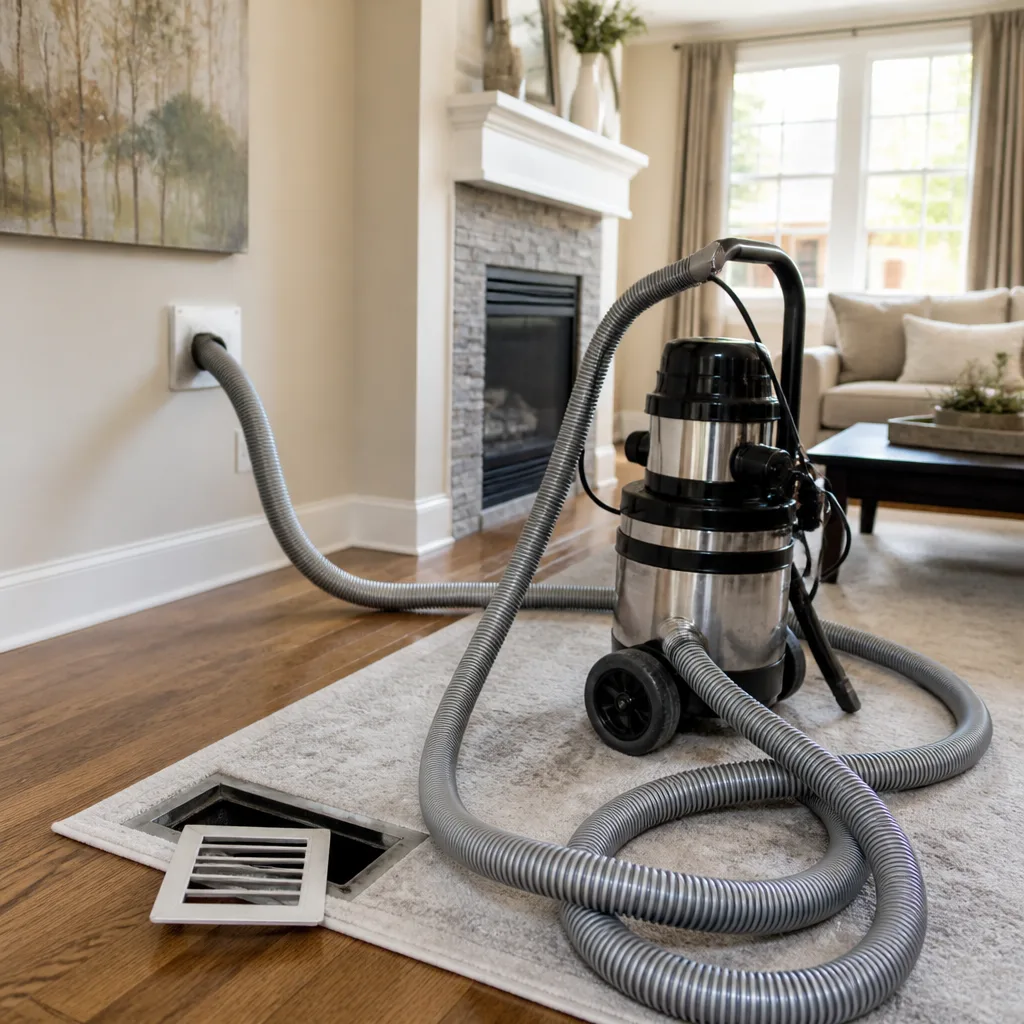
- Using a shop vac to “clean” the ducts, which can spread contamination and won’t address the pressure side
- Disassembling a dryer vent to rod it out without the right equipment
If you find something on the safe list that concerns you, or if the symptom you’re chasing isn’t resolved by any of the safe checks, it’s time for a professional inspection. That’s the line where trained eyes and professional-grade equipment start to matter.
The Role of Professional Equipment in Getting the Fix Right
A proper duct diagnosis and cleaning depends as much on the equipment as the technician. Consumer shop vacs and blowers don’t generate the negative pressure needed to pull debris out of a full duct network, and they don’t contain what comes loose. Professional-grade equipment does both, and it’s the difference between cleaning a system and moving dust from one part of the house to another.
We use Rotobrush and Nikro systems, which are purpose-built duct cleaning platforms that commercial contractors use. We also incorporate Abatement Technologies air filtration, which is a contamination-containment standard borrowed from professional remediation. That matters on jobs where the duct is heavily loaded or has microbial growth: containment runs the entire job, not just the part near the register.
Equipment brands matter for another reason. Honeywell and Aprilaire make some of the most recognized IAQ hardware in the industry, and working around their components means we understand how the system should perform once it’s clean – not just what it looks like when we finish. Our HVAC cleaning service sits alongside the duct work so the equipment and the duct network are treated as the one system they are.
None of that is a knock on a homeowner who tries to diagnose the problem in advance. Looking at a register, checking the filter, listening for rattling are good instincts. It’s the fix that needs professional equipment, not the observation.
How Roy’s Housing and Climate Shape Duct Problems
Roy sits in the northern Wasatch Front, and the way homes here are built and used affects what goes wrong in ducts. Winters are cold enough that heating systems run hard for months, and summers bring enough heat that the AC runs hard the rest of the year. A duct system that’s already marginal gets pushed to its limit in both seasons, and problems that would stay hidden in a milder climate show up here.
A few patterns we see in Roy that shape what a fix looks like:
- Attic duct runs. Many homes in Roy have duct runs in the attic space. That’s fine until a disconnected joint starts dumping conditioned air into the attic, or a leaking run pulls in attic dust. Sealing matters as much as cleaning on these homes.
- Spring dust and pollen. Wasatch Front spring brings dust from the surrounding valley and pollen that loads filters fast. Homeowners who notice their filter filling up faster than usual may be seeing a dust problem that starts upstream of the filter.
- Renovation cycles. Housing turnover, remodels, and HVAC replacements all leave behind construction debris that doesn’t always get cleared before the system is turned back on.
- Dryer vent exposure. Dryer vents in Roy homes run through walls and sometimes attics – the same spaces where duct problems develop. Dryer lint is a leading cause of residential fires, and it’s a hazard a pure air-quality cleaner won’t address. That’s why dryer vent cleaning is part of our standard lineup, not an add-on.
The upshot is that a duct fix in a Roy home usually needs to account for how the ducts run and where the leaks are, not just how dirty they are. See our full Roy Air Duct Cleaning services page for the complete menu: cleaning, HVAC cleaning, duct repair and sealing, dryer vent cleaning, and air sanitizing.
Common Mistakes to Avoid
- Chasing the symptom instead of the cause. Buying a better filter for a dust problem, or calling an HVAC tech for an uneven temperature, treats the symptom. The cause is almost always in the duct network.
- Accepting a per-vent quote. A price that scales with the number of vents tells you nothing about what the job actually involves. Insist on a per-system estimate based on inspection.
- Letting a low-bid cleaner into the system without inspection. A crew that arrives with a shop vac and no camera can’t diagnose the duct, and can’t clean what it can’t reach.
- Cleaning without sealing when the problem is leaking joints. Cleaning a duct that’s pulling in attic air just re-contaminates it. The seal comes first when there’s a leak.
- Forgetting the dryer vent. Homeowners who care about air quality often skip the one vent in the house that’s a genuine fire hazard. Dryer vent cleaning belongs on the same visit.
- Opening the air handler to “check inside.” That’s electrical equipment and duct pressure you should not take on yourself. Pulling a register is fine; pulling a panel is not.
- Skipping the post-clean verification. A cleanup that ends without before-and-after photos and a check on static pressure leaves you guessing whether the work actually solved your problem.
See the difference
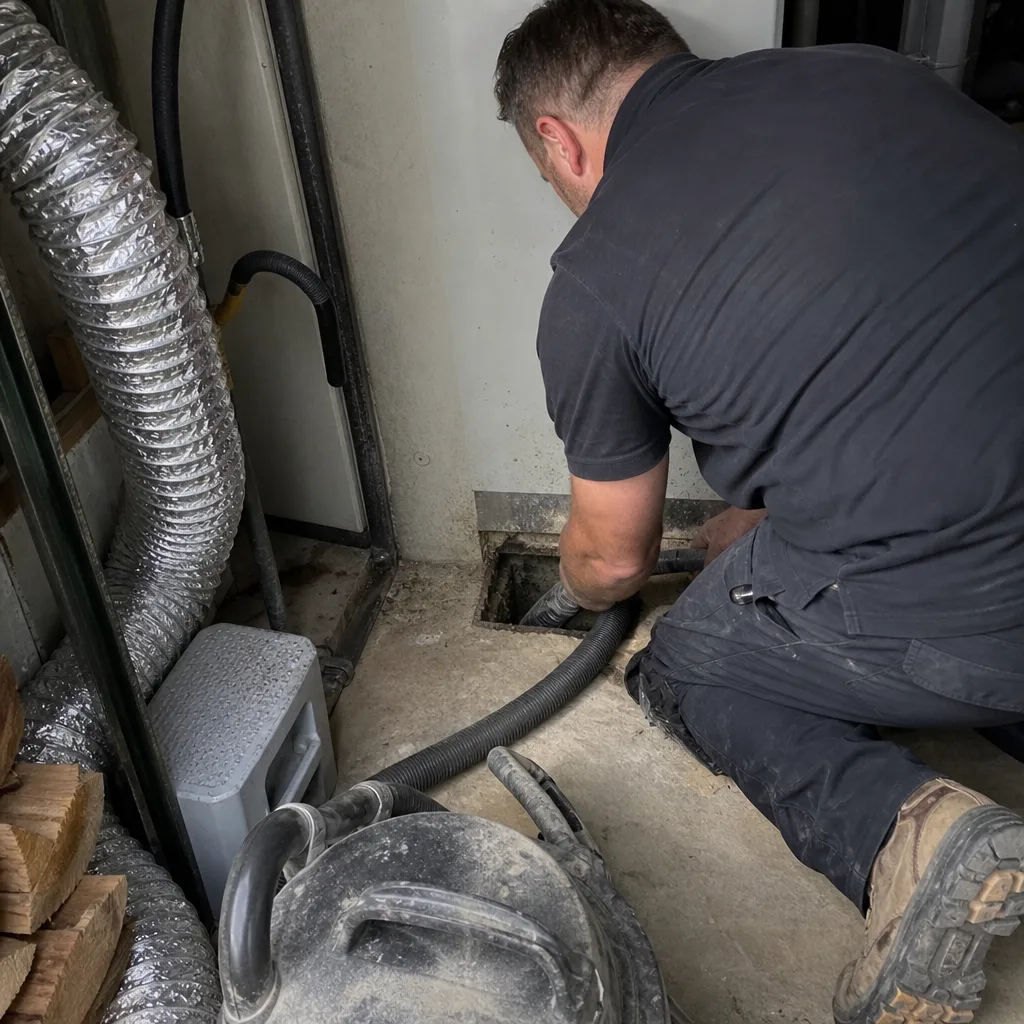 Before
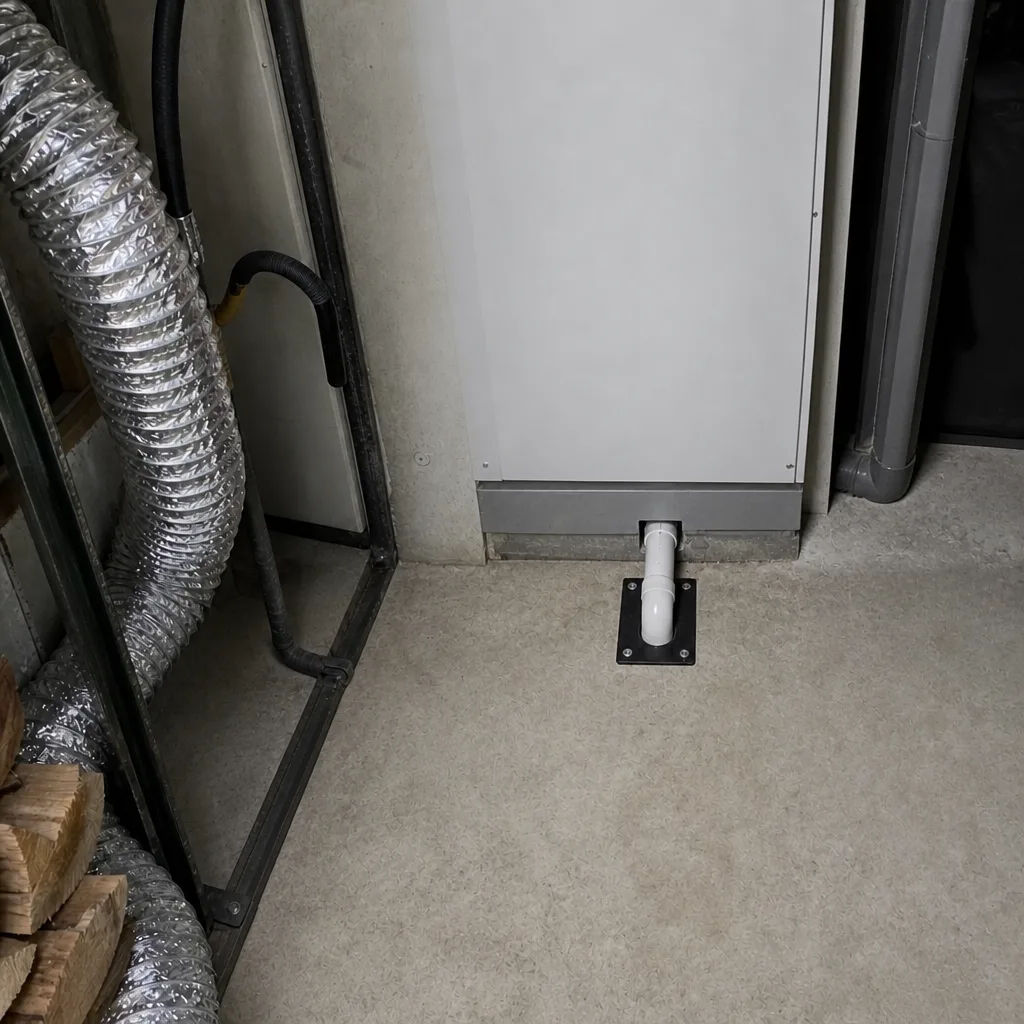 After
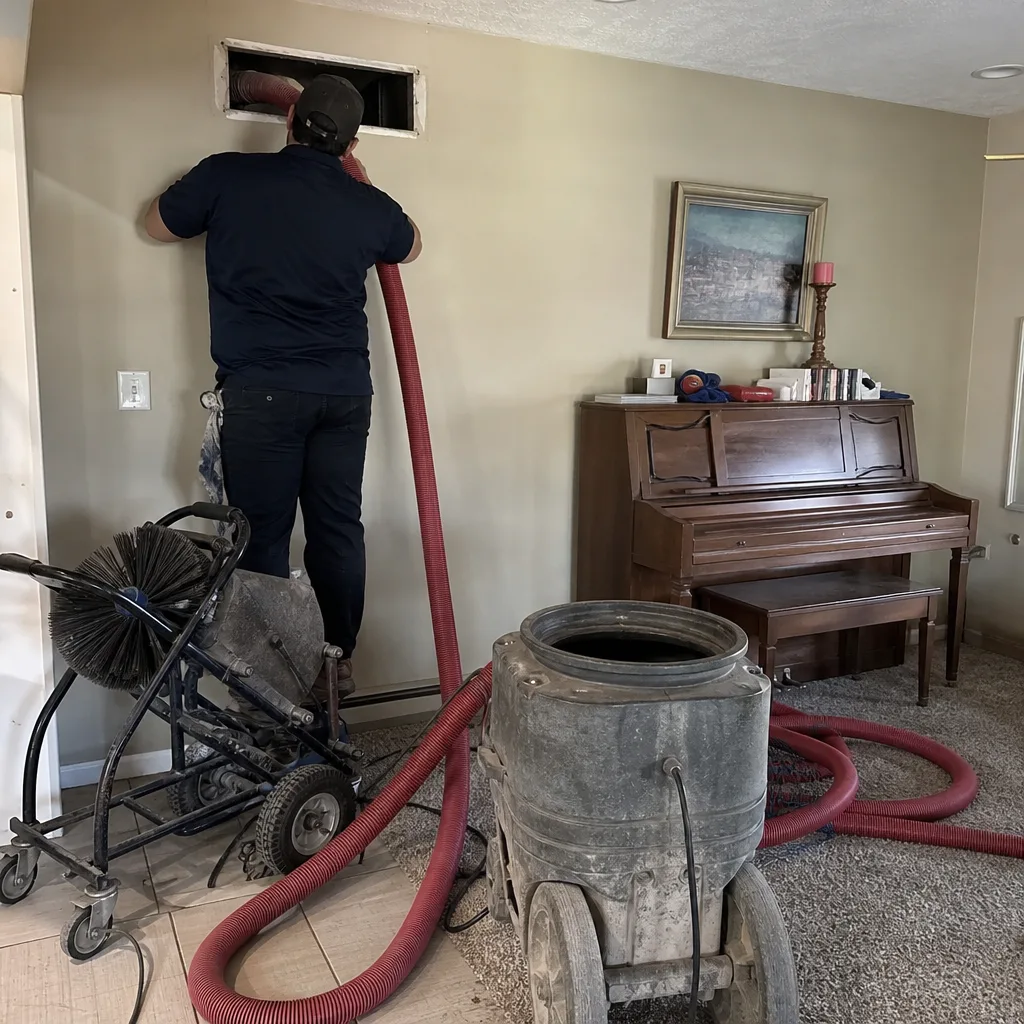 Before
 After
 Before
 After
When to Call a Professional
Call a professional when the symptom doesn’t resolve after a safe check at the register, or when the check reveals something beyond surface dust. Specifically: a musty smell you can’t trace, a room that’s consistently unbalanced, dust that builds up within days of cleaning, a dryer that takes much longer than it used to, or a system that’s just been through renovation or pest remediation. It’s also the right call after an HVAC replacement, because new equipment deserves a clean duct network to connect to.
The other case for a professional is the one this guide keeps returning to: when you don’t know which category of problem you have. That’s not a failure of the homeowner – it’s the nature of a system that lives behind walls. A camera inspection resolves it. Roy Air Duct Cleaning offers free estimates in Roy – call (877) 389-1745. We answer 24/7. Fast dispatch from 7am to 7pm, Sunday through Friday.
Frequently Asked Questions
Look at the symptom pattern. Cleaning problems show up as dust, odor, or allergy complaints that get worse when the HVAC runs, with the system otherwise functioning. Sealing problems show up as whistling, rattling, dust in rooms away from the return, or a room that never gets airflow. Design problems are imbalances that persist even after cleaning and sealing. Camera inspection is what confirms which bucket you’re actually in.
That room is almost always the far end of a run that’s restricted, leaking into a wall cavity, or undersized from the beginning. The thermostat is doing its job; the delivery to that room is not. A register-level check and a camera inspection will tell you whether the fix is cleaning, sealing, or balance correction. Call (877) 389-1745 for a free estimate.
No, and it can make things worse. A shop vac doesn’t generate the negative pressure needed to pull debris out of a full duct network, and it doesn’t contain what comes loose. Professional equipment like Rotobrush and Nikro systems work on the pressure side of the problem, not just the visible surface. Pull a register and look inside – that’s the safe self-check. Cleaning is not.
There’s no universal number, and anyone who quotes one without context is guessing. The honest answer is based on condition: after renovation, after pest remediation, after an HVAC replacement, when you notice musty odor or persistent dust, or when symptoms suggest a restricted return. A visual inspection tells you whether the condition calls for cleaning. Schedule the inspection and let the duct network tell you the schedule. Call (877) 389-1745 for a free estimate.
Because the crew showing up isn’t equipped to find or fix the actual problem. A low-bid quote rarely includes camera inspection, containment, or the professional-grade equipment that separates a real cleaning from a surface wipe. Ask what equipment they use, ask for the inspection findings, and ask for before-and-after photos of your own ducts. The right quote might cost more up front and cost less over the life of the system.
They share the same wall and attic spaces in most Roy homes, and dryer lint is a leading cause of residential fires. A clogged dryer vent is a safety issue, not a comfort issue, and it’s a hazard most air-quality cleaners don’t address. That’s why it’s part of our five core services rather than an add-on. Cleaner ducts and a clear dryer vent are one visit when the work is done right.
Yes, if the system is going to start clean. A new air handler connected to a dirty duct network will immediately pull the same contaminants through and settle them into the new equipment. Duct cleaning before or alongside the HVAC replacement gives the new system a clean start, and it lets the installer verify the duct network is intact. Call (877) 389-1745 for a free estimate.
Cleaning removes the material – dust, debris, biological growth – from the duct interior. Sanitizing treats the surfaces that remain with a product designed to reduce microbial load. They’re related steps, not substitutes for each other. Cleaning without sanitizing is fine when the contamination is dust-only. Sanitizing follows a clean when there’s been moisture, growth, or a pest-remediation situation to address. Our technicians have up to 9 years of experience, and in that experience the two are almost always sequenced cleaning first, then sanitizing.
Real diagnostic camera work is standard on the equipment we run. Rotobrush inspection units put a camera into the duct so the technician and the homeowner are looking at the same thing. A cleaner who can’t show you footage of the debris dam or the collapsed flex is asking you to trust them. Our work is based on photos and footage of the actual duct, before and after.
Yes, and that’s the most common misdiagnosis we run into in Roy. A restricted return raises static pressure, drops blower output, and leaves supply registers sluggish. The system looks like it’s failing to cool or heat when it’s actually failing to pull air. Cleaning the return path and re-measuring static pressure is the fix, not a service call on the equipment. If your HVAC tech says the equipment is fine but the house isn’t, ask about the duct.
The Bottom Line
Most duct problems in Roy homes aren’t HVAC failures. They’re duct failures: contamination, physical breakdown, or design. Match the symptom to the category before you spend money on the fix, because cleaning, sealing, and design correction aren’t interchangeable. Pull a register, look and listen, and if the safe check doesn’t resolve your question, get a camera inspection before you get a quote. A professional who inspects first and quotes second will tell you which of the three categories you’re actually in. Professional-grade equipment and containment aren’t a luxury on that kind of job – they’re what makes the diagnosis real. Cleaner ducts, safer dryer vents, better air. One call.
Call (877) 389-1745 for a free estimate. We answer 24/7. Fast dispatch from 7am to 7pm, Sunday through Friday. Every job is quoted one flat price per system, agreed before work starts, with before-and-after photos of your own ducts so you can see the difference. If you’re weighing which service fits your situation, the air duct cleaning page covers the full process from inspection through verification, and the Roy Air Duct Cleaning home page shows how cleaning, sealing, sanitizing, HVAC cleaning, and dryer vent work come together under one visit.
Written by the team at Roy Air Duct Cleaning.