
Nikro Air Duct Cleaning in Roy: A Homeowner’s Guide
When a duct cleaning machine generates negative pressure inside your duct system, it isn’t just vacuuming. It turns your entire duct network into a sealed collection chamber, and the dirt that’s been sitting in it for years has nowhere to go but into the collection filter. Most residential rigs never achieve that seal. If you’ve watched a technician drag in something that looks like a shop vac and wondered if the word “professional” was doing much work in that sentence, this guide is for you.
What Makes Nikro Equipment Different From a Shop Vac?
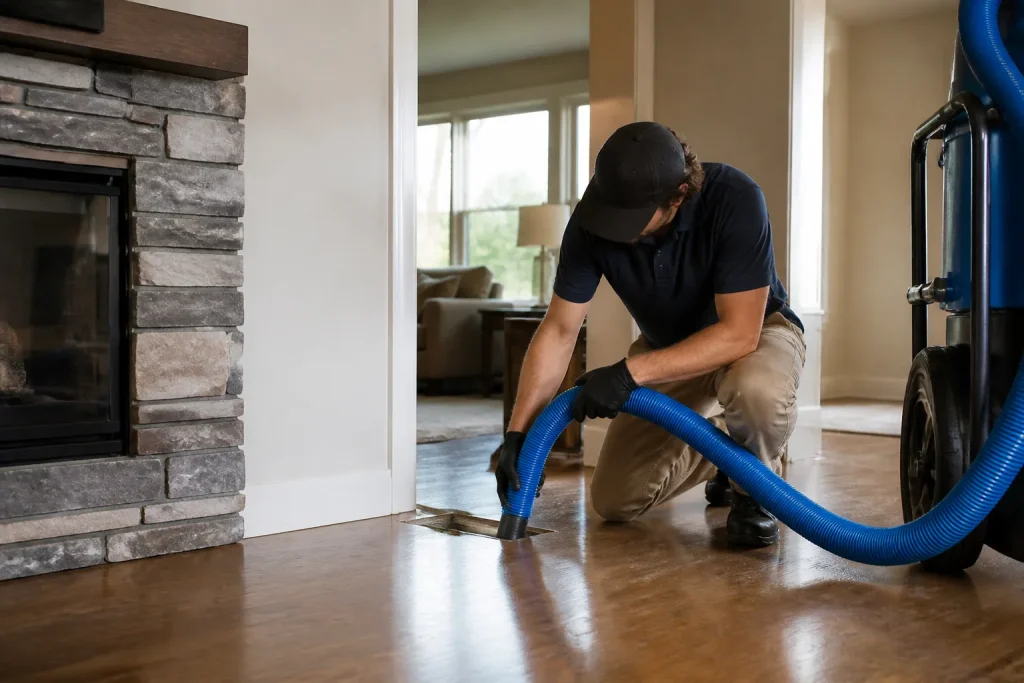
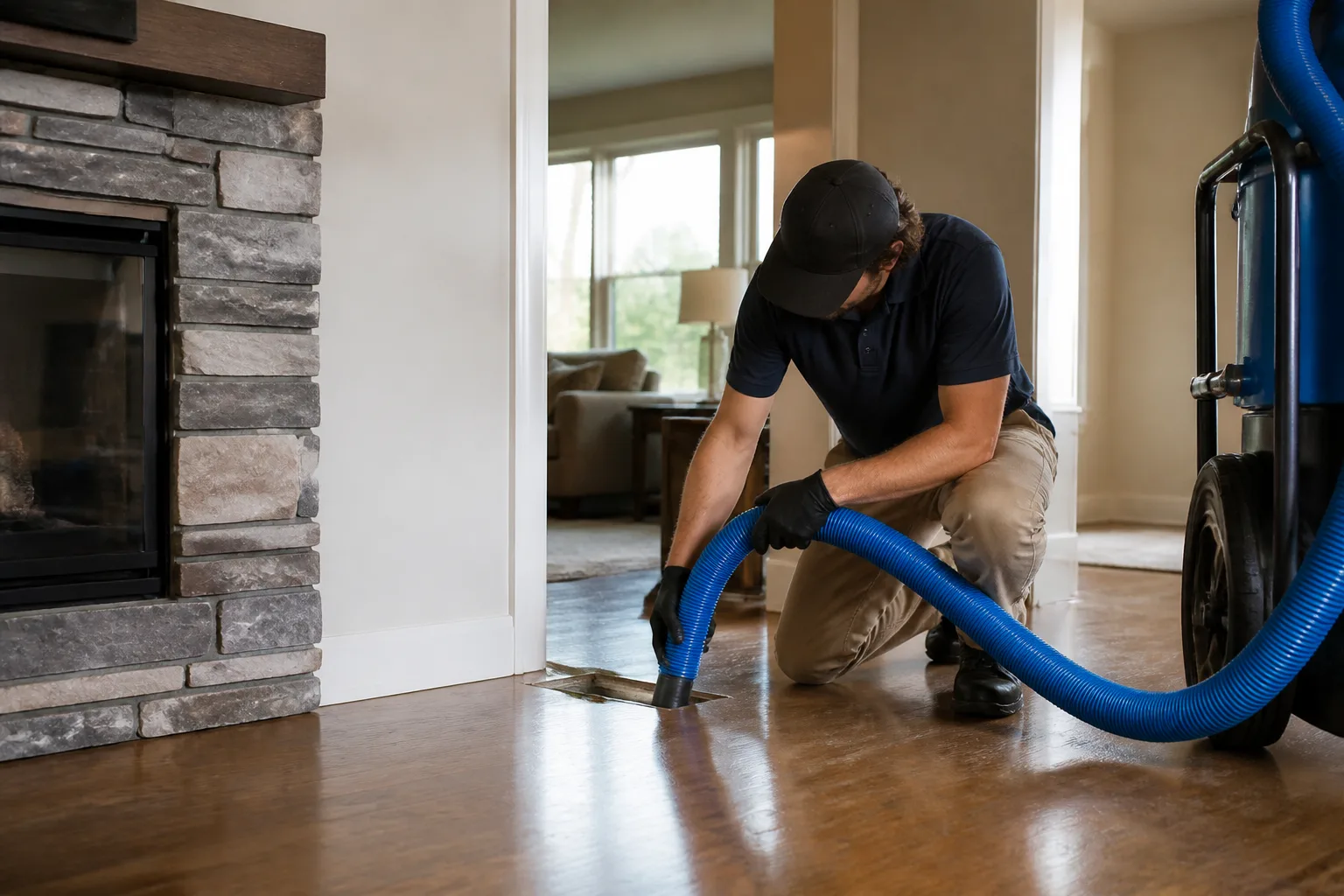
Nikro negative-pressure systems work on the same principle as professional remediation equipment: create and hold a pressure differential across the entire duct system, then extract contaminants through a controlled point of collection. A shop-vac rig creates localized suction at the hose end but never seals the system, so dust gets agitated and redistributed into your living space rather than removed. That’s not a knock on the shop vac. It’s just not built for the job you’re hiring someone to do.
The difference shows up mechanically in three places:
- Sealing before cleaning. Every register and return gets blocked off except the collection point, so the pressure differential stays consistent. Without that seal, suction drops the moment a technician opens a second vent.
- Air volume, not just air speed. A residential shop vac might move a couple hundred cubic feet per minute at the nozzle. Negative-pressure duct machines are rated to move substantially more, and that volume is what lifts settled debris from horizontal runs instead of just skimming the surface of the first few feet.
- Filtration on the exhaust side. Whatever gets pulled out has to be contained. Nikro units pair with HEPA-grade filtration, which is why Roy Air Duct Cleaning also runs Abatement Technologies air filtration alongside the cleaning process.
None of this makes a shop vac a bad tool. It makes it the wrong tool for source removal.
What Does “Source Removal” Actually Require?
Source removal means physically detaching and removing the contamination at its origin, not pushing it around. NADCA (the National Air Duct Cleaners Association) treats source removal as the standard for a legitimate duct cleaning, and the practical requirements are stricter than most homeowners expect. The system has to be under continuous negative pressure during the work. Every branch of the ductwork has to be reached with an agitation tool. And the debris has to travel to a collection device, not just get loosened inside the system to settle again later.
In Roy, that last point matters more than homeowners realize. Homes here sit in a dry, high-desert climate where fine dust and construction grit get pulled into return ducts year-round. Once that material is agitated, it stays airborne for a long time if it isn’t captured.
Before any cleaning starts, the duct system should be checked for leaks. A duct run with gaps at joints or failing connections at registers will bleed pressure and undermine the whole process. That’s one reason duct repair and sealing sits in the same service lineup as cleaning: an unsealed system can’t hold negative pressure, and a clean duct that leaks is a clean duct that gets dirty again fast. If your ducts are showing gaps or separation, it makes sense to have that addressed alongside the cleaning rather than after.
Portable, Truck-Mounted, and Negative-Pressure: What’s the Real Difference?
The three equipment categories you’ll run into as a homeowner are portable units, truck-mounted units, and trailer- or skid-mounted negative-pressure systems. Each produces a genuinely different outcome, and how a contractor answers the question of which category they use tells you a lot.
Portable units are brought into the home. Some are purpose-built duct machines, others are essentially high-end vacuums. CFM ratings matter here. Ask what the unit is rated for at the working end of the hose, not just at the motor.
Truck-mounted systems run off a large external power source and typically deliver more consistent suction over longer runs. The tradeoff is hose length: every extra foot of hose loses pressure.
Negative-pressure systems like the Nikro equipment we use are designed specifically to hold a sealed pressure differential across the whole system, with collection and filtration built into the machine. This is the equipment class Roy Air Duct Cleaning works with, and it’s the same category commercial contractors rely on for larger jobs. When you’re in Roy comparing estimates, ask this exact question: “Is your equipment designed to hold negative pressure across my entire system, or does it generate suction at the hose?” A contractor who can answer that clearly is usually a contractor who knows the difference.
How Do Nikro Units Match Different Job Conditions?
Duct cleaning isn’t one job. A home with sheet metal ductwork needs different agitation and pressure settings than a home with fiberglass-lined ducts, and commercial spaces introduce another set of variables entirely. That’s why Nikro builds more than one configuration, and why we match the machine to the system rather than showing up with one unit and hoping.
Roughly speaking:
- Standard residential sheet metal: a high-volume negative-pressure unit paired with rotary agitation tools. The sealed system holds pressure, the tools knock debris loose from every wall of the run, and the recovery captures it.
- Residential fiberglass-lined ductwork: more careful pressure control and softer agitation, because the liner surface can be damaged by aggressive brushes. Lower pressure with better filtration does the work here.
- Commercial and larger residential-property jobs: higher-capacity Nikro configurations, often run in coordination with Abatement Technologies air filtration to protect occupied spaces during the work.
If you’re managing a rental property or small commercial space in Roy, the equipment question is worth asking directly. It’s also worth reading through our air duct cleaning page to see how the process is laid out before you call anyone.
What Should You Look for After the Cleaning Is Done?
You can’t watch the inside of every duct run, but you can verify that a proper negative-pressure clean actually happened. Here are the post-cleaning indicators a homeowner can check without any equipment:
- Before-and-after photos of your own system. A legitimate operation documents what came out and what the inside of your ducts looked like after. Ask to see them if they aren’t offered.
- Dust settling inside your home. If the job was done with real negative pressure, there should be minimal added dust on surfaces near registers. If there’s a visible film over everything near the vents, the system wasn’t sealed properly.
- Return grille interiors. Pop the grille off a return vent and look inside. You should see clean duct wall, not a fresh layer of dust already clinging to it.
- Air filter condition after a few days. A clean filter should stay clean noticeably longer if the source material was actually removed.
For airflow and mechanical components, our HVAC cleaning service covers the blower, coil, and air handler side of the system. Ducts can be spotless and still perform poorly if the equipment pushing air through them is fouled.
When Should You Call a Pro?
Duct cleaning isn’t something most homeowners should attempt. The negative pressure that makes the process work is the same thing that makes a poorly set-up DIY attempt blow debris into living spaces. If you’re seeing visible dust plumes from registers when the system kicks on, smelling musty odors after running the heat, or noticing allergy symptoms that spike indoors, it’s time for a professional evaluation. The same holds if you’ve recently finished a renovation, had pest remediation done, or replaced your HVAC system.
Related services in Roy: dryer vent cleaning, which addresses a leading cause of home fires and gets overlooked by most air-quality-only contractors. If you’re already scheduling duct work, it’s worth adding. Our technicians have up to 9 years of experience and work with Honeywell and Aprilaire components so the system goes back together with hardware that holds up.
If you’d rather skip the research and get an answer, call (877) 389-1745. We answer 24/7. Fast dispatch from 7am to 7pm, Sunday through Friday.
The Bottom Line
The equipment question is the one that separates real duct cleaning from a surface-level sweep. Negative-pressure systems like Nikro are designed to turn your entire duct network into a sealed collection chamber, hold that differential throughout the job, and capture what comes out. Anything less gets you an agitated system, not a clean one. When you’re comparing estimates in Roy, ask what equipment the contractor is bringing and whether it’s designed to hold pressure across the whole system.
If you’re in Roy and need help, Roy Air Duct Cleaning offers free estimates. Call (877) 389-1745. We answer 24/7, with fast dispatch from 7am to 7pm, Sunday through Friday. You can also read more about our Roy Air Duct Cleaning team and how the process works before you decide.
Frequently Asked Questions
Nikro negative-pressure systems are built to hold a sealed pressure differential across the entire duct network, while standard vacuums only generate suction at the hose end. That difference means Nikro-class equipment pulls debris from the full run of ductwork rather than just moving surface dust. Ask any contractor which category their equipment falls into before you book.
Yes. An unsealed system can’t hold negative pressure, so leakage at joints or registers undermines the entire cleaning process. Any reputable contractor should inspect for leaks before starting and either address them or flag them. If you’re in Roy and your ducts are showing gaps, call (877) 389-1745 for an estimate on what it would take to fix.
Ask for before-and-after photos of your own system. Check return grilles for clean duct wall. Watch how much dust settles near registers after the job. Those three signals will tell you whether proper negative pressure was achieved. If something looks off, call (877) 389-1745 and we’ll walk you through what to check.
Usually because the equipment category is different. A low quote often reflects a shop-vac-class rig without a sealed pressure differential, which cannot perform genuine source removal. Equipment like Nikro and Abatement Technologies air filtration costs more to operate, and that’s the difference you’re paying for. For a specific estimate on your home in Roy, call (877) 389-1745. Estimates are free.
Written by the team at Roy Air Duct Cleaning.
Need Air Duct Cleaning Help?
Call Roy Air Duct Cleaning - the local pro we connect you with is licensed and insured, with free written estimates in Roy.
(877) 389-1745